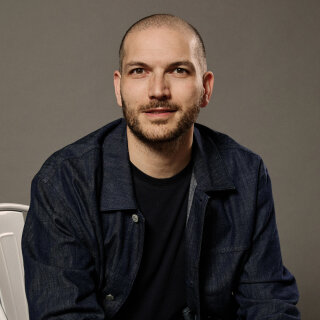
To mark a new collaboration between two organisations renowned for celebrating creativity, we posed some questions to Taeyoul Park, Chairperson of the MAD STARS organising committee.

MAD STARS and the Epica Awards have just announced a new partnership. What do you think are the advantages for both yourselves and Epica?
This partnership is highly meaningful because it connects two international awards with distinct strengths and brings together two different perspectives on global creativity.
MAD STARS is a global platform based in Busan that has brought together creative solutions from around the world. The Epica Awards, meanwhile, has established a unique authority by evaluating creativity through the sharp perspective of journalists, effectively bypassing the conventional, insular frameworks of the traditional advertising establishment.
From MAD STARS’ perspective, one of the greatest assets of this partnership is Epica’s global media network. The Epica Press Club, rooted in an international jury of more than 200 journalists spanning the globe, will offer a powerful megaphone to immediately amplify MAD STARS’ award-winning work and programs to a global audience. I believe this will take the global influence that we have been strategically expanding to the next level.
For the Epica Awards, this partnership offers a decisive opportunity to build a stronger connection with Korea and the wider Asian market, which are among the most dynamic creative markets in the world today. Korea is currently evolving at remarkable speed, driven by the global impact of K-content, digital platforms, AI-powered production environments, and next-generation brand experience (BX).
As the tidal wave of Korean culture—or Hallyu—redefines the parameters of global consumption, Busan offers a pivotal platform where creative voices from Asia can be more actively embraced. By connecting Eastern and Western standards of creativity, this partnership can become a mutually beneficial alliance that presents a new global standard for the advertising and marketing industry.
Tell us a little about the history of MAD STARS. How long has the competition existed and what are its main aims?
Rooted in Busan since its 2008 debut as AD STARS, the festival has steadily evolved alongside a changing media landscape. Driven by technological advancements and deep cross-industry convergence, the festival has expanded its scope beyond traditional commercials to encompass marketing and digital content. Marking this profound transformation, the festival adopted its current name, MAD STARS, in 2022.
Now in its 19th edition, MAD STARS has always aimed to be more than a regional awards show. From the beginning, it has pursued the role of an open international platform, drawing visionary ideas to Busan and fostering exchange with the global creative community.
Today, MAD STARS has become one of Asia’s leading global creative platforms, covering advertising, marketing, technology, digital content and social impact. It has also established itself as a respected global awards program, with more than 350 jurors from 83 locations participating in the judging process.
Our core slogan is “Share MAD Solutions That Change the World.” We are moving away from the mere transactional nature of entries and awards. Our true ambition lies in exploring how marketing, advertising, and digital content, when fused with technology and centered on humanity, can catalyze profound, lasting change in society.
MAD STARS has therefore evolved into a comprehensive creative festival that includes not only awards, but also conferences, exhibitions, networking programs and global competitions for future generations, including YOUNG STARS and NEW STARS.
One of our most crucial distinctions is that we have continued to move beyond Western-centric standards of advertising evaluation. We respect cultural diversity and assess social impact as an equally important value. One of MAD STARS’ defining distinctions is its innovative barrier-free philosophy. By welcoming submissions from professionals and amateur creators—and allowing amateurs to submit their work entirely free of charge—the festival has carved out a unique and prestigious identity on the global stage.
We respect cultural diversity and assess social impact as an equally important value.
How has it evolved over the years?
The most notable evolution of MAD STARS is that it has moved beyond the conventional framework of an advertising festival and expanded into a comprehensive creative knowledge platform.
In the past, many awards focused heavily on the visual craft or originality of the work. Today, MAD STARS evaluates creative work in a more multidimensional way. We look at whether the work solved a real business problem, whether it created meaningful changes in consumer behavior, and whether technology was used ethically and meaningfully.
The organization and operation of the awards have also advanced to a global standard. With a global brain trust of over 350 premier jurors from over 80 locations worldwide, MAD STARS operates a rigorous multi-stage judging system that begins with strict online preliminary judging and culminates in final judging conducted in person in Busan.
At the same time, MAD STARS has consistently anticipated changes in the industry. We moved quickly to introduce categories related to AI, interactive work and effectiveness.
Since 2024, the festival has bifurcated its programming into distinct B2B professional and public audience tracks, simultaneously deepening its industry authority and expanding its community reach.
In 2025, under the theme “AI-vertising,” MAD STARS directly addressed how artificial intelligence (AI) is reshaping the entire creative process and helped lead global industry discussions around that shift.
In this sense, MAD STARS has evolved beyond mere quantitative growth. Each year, the festival raises key questions for the creative industry, firmly establishing itself as a global creative agenda setter.
What’s the very latest news you’d like to share: new categories, new competitions?
For MAD STARS 2026, our 19th edition, we have completely redesigned the entry category structure to fully reflect the mechanisms of today’s business environment, where creative work is planned, executed and evaluated in real-world market contexts. The key changes can be summarized in three main areas.
First, we have reorganized the entry structure around two clear pillars: SOLUTION and POSITIVE IMPACT.
The SOLUTION Group evaluates campaigns that solve real business and communication challenges. The key criterion is how effectively an idea is combined with sophisticated strategy to deliver tangible results.
The POSITIVE IMPACT Group recognizes work that creates meaningful change for humanity and society through values such as sustainability, diversity and social responsibility. This year, we have also introduced Health Stars, reflecting the explosive growth of healthcare communication.
Second, in response to the spread of generative AI, we have proactively established new standards for transparency and fairness in creativity. We have introduced a Use of AI sub-category within Craft, and all entrants are required to disclose whether AI was used and, where applicable, how it was used. I believe this will become a new global standard for how technology-assisted creative work can be evaluated fairly.
Third, we have launched a CMO Program tailored for decision-makers from global corporations. This initiative allows MAD STARS to forge direct ties with the leaders who shape today’s business landscape, stepping well beyond the traditional advertising and agency-centric ecosystem. Ultimately, we aim to expand MAD STARS into a true business hub where practical business matching can take place.
Guided by the theme ‘AMPLIFY’, MAD STARS 2026 will be staged from 26 to 28 August at SIGNIEL BUSAN and across the Haeundae area in Busan, South Korea. The countdown is now on for the final entry deadline on 15 June 2026.
Each year, the festival raises key questions for the creative industry, firmly establishing itself as a global creative agenda setter.
You also have a conference too. What themes can we expect to see there?
As a high-level knowledge-sharing platform, the MAD STARS conference holds equal weight alongside the awards. This year’s theme, AMPLIFY, poses a fundamental question: what drives the shift from a brand’s latent potential to disruptive market influence?
In an age of information and media saturation, it is no longer enough simply to create ideas. The real challenge is to translate those ideas into market results. This year, we will explore the structures and strategies behind that process through three core pillars.
The first is Marketing: Strategic Resonance, or the amplification of strategy. This will examine hyper-personalized marketing that uses data to precisely target consumers’ unmet needs, intervenes at key “Moments of Truth” and builds strong brand fandoms.
The second is AI Technology: Technological Surge, or the amplification of execution. This will look at how AI can be embedded not as a simple experimental tool, but as a core professional infrastructure that transforms production processes and presents proven business models optimized for cost and time.
The third is Creativity: Creative Explosion, or the amplification of emotional impact. As technology becomes more advanced, human-centered and meaningful storytelling becomes even more important. This track will explore the power of strategic surprise and the mechanisms through which campaigns can grow into cultural phenomena.
Elevating this year’s conference to an unprecedented scale is the inclusion of dedicated conversation sessions with our Executive Jury, comprising an elite lineup of global marketing and creative pioneers.
They include Raja Rajamannar, Senior Fellow and former Chief Marketing and Communications Officer at Mastercard, who is widely regarded as one of the world’s leading marketers; Aurora Straton, Creative Lead at Google; Anny Havercroft, Global Head of Product MarComs at TikTok; Sandipan Bhattacharyya, Chief Creative Officer at Monks; and Tara McKenty, Chief Creative Officer of AKQA Australia and New Zealand.
These industry-defining changemakers operate at the very forefront of global trends. They will convene in Busan to engage directly with audiences and offer new perspectives on the future of creativity.
Korea is now helping set standards not only in Asia, but across the global market.
MAD STARS is based in South Korea. What creative trends have you noticed emerging from the region over the past couple of years?
The recent shifts sweeping the Korean market are far from short-term trends; rather, they signal a fundamental restructuring of the creative industry.
Korea is now helping set standards not only in Asia, but across the global market. I would define the current direction of the Korean market through three major shifts.
The first is the emergence of AI as core professional infrastructure. Korea is one of the fastest markets in the world when it comes to internalizing new technology. If 2023 was a period of exploration for generative AI and 2024 was a period of experimentation, then starting last year, major advertising and marketing companies in Korea began integrating AI not merely as a production tool, but as full-scale core operational infrastructure.
Korean creators are using AI to maximize production efficiency, while reinvesting the resources gained into higher-level strategy and human-centered storytelling. This is driving a new level of creative excellence.
The second is K-storytelling that speaks to universal human emotions. The unique strength of Korean creativity lies in its capacity to transmute hyper-local social contexts and intimate, everyday emotions into a shared human experience that resonates globally.
In 2025, exports from Korea’s content industry increased by 5.9% year over year, demonstrating the continuing global impact of K-content. This has also elevated the status of Korean advertising. Korean campaigns are no longer limited to communicating product functions. They are creating independent cultures, building powerful fandoms and generating meaningful resonance in global markets.
The third is the growing focus on SDGs and human-centered values. Paradoxically, as technology becomes more advanced and automated, the Korean market is paying even greater attention to human-centered values and social impact.
We are seeing more authentic campaigns that address shared human challenges such as mental health, the climate crisis and diversity. Many of these campaigns are receiving strong recognition on the global stage.
If I were to summarize this movement, I would say: Korea is scaling efficiency through AI while deepening the essence of creativity through human insight. That is the fundamental reason why creative leaders around the world are paying attention to Korea and why they come to Busan every summer.
Finally, what are your thoughts on Epica’s unusual jury, which is led by journalists?
I believe the Epica Awards’ journalist-led jury system is one of the clearest and most discerning answers to a question the advertising industry has wrestled with for decades: whose perspective best ensures that advertising remains both objective and socially relevant?
Many global awards are structured around industry insiders evaluating one another’s work. Epica has boldly broken away from that convention. Its jury is made up of professional journalists and editors who are completely free from direct industry interests and who judge work solely on its originality and quality of execution. Its strict rule that jurors cannot judge work from their own market also helps preserve the highest level of objectivity.
A symbolic recent example is INNOCEAN’s “Night Fishing” campaign from Korea, which won the Innovation Grand Prix at the Epica Awards, becoming South Korea’s first Epica Grand Prix winner. It is a powerful example of how Korea’s original storytelling and bold technological experimentation can be recognized and validated by a global jury of journalists.
Journalists observe countless campaigns and major shifts in the global industry every day. That gives them a particular ability to recognize the real value of work not through the internal standards of a specific agency, but through broader market, societal and cultural dynamics.
MAD STARS focuses on evaluating internal industry expertise and practical execution. Conversely, the Epica Awards leverages the external perspective of journalists to champion objectivity, news value and broader cultural impact. When these two perspectives converge, they provide a broader, multidimensional lens through which to view global creativity.
In particular, the fact that journalists pay close attention to authentic stories and campaigns that create meaningful social impact strongly resonates with MAD STARS’ own philosophy of impact-driven creativity.
I believe this partnership can grow beyond a simple working agreement. It can become a relationship that helps define new standards of creative value for the era ahead.