INNOCEAN Berlin and condom brand Billy Boy created “Camdom”, a remarkable app that sparked conversations about filming and consent.
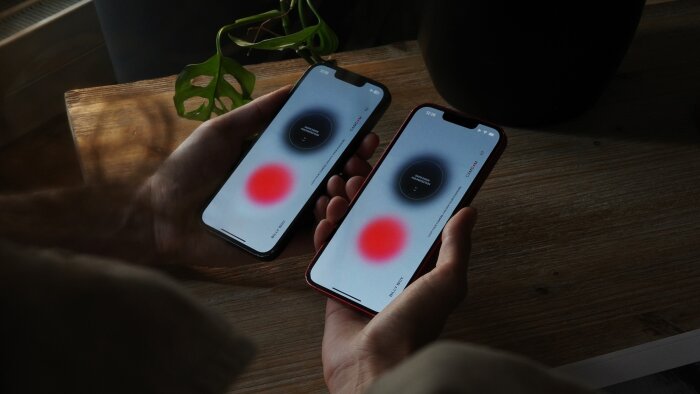
The Camdom app is easy to explain. Once opened, it blocks the camera not only of the device concerned, but all devices nearby. It’s designed to prevent the non-consensual filming of intimate moments, which might later be shared online, provoking intense trauma and even suicide among victims. Take a look at the case film.
Making the app a reality was a challenge, to say the least. It started with a brief from Billy Boy, the leading German condom brand.
Creative director Jose Suaid explains: “INNOCEAN is basically an in-house agency, working for Hyundai as our main client. But we also have a proactive new business department. When Billy Boy came in as a new client, we started thinking about its challenges and struggles and how we could help.”
A digital activation was mentioned early on, particularly as the client wanted to engage with Gen Z. One obvious route was TikTok. “Then we started digging a bit further to understand the actual behaviour of Gen Z, and one of the insights we found was that, for them, their phones are like an extension of their bodies.”
Engineering the unprecedented
Ever-present, phones can be used for positive moments like ordering great food, but their ubiquity is also a potential threat. “We discovered that there’s a genuine issue about using phones for non-consensual recording during sex and doing harm with that material.”
Protecting people from this appalling act could be considered a new form of safe sex. Creative director Sebastian Pattis, who was behind the project with Jose, observes: “The conversation around the Billy Boy brand, and condoms in general, was really not at the same level as it had been in the 90s. Maybe it was because there was nothing new to say. Although they’re just as important now as they’ve always been, for young people they’re like something from the past. So we felt we could also enable the brand to be relevant again.”
The “camdom” idea pulled these two challenges together: it was the condom of the digital generation.
Then came the science part. In order for the app to work efficiently, it had to block every device in the room, whether powered by Android or iOS, without recourse to Wi-Fi. Turned out, that was extremely hard to do. Especially since the agency does not have in-house app developers.
Jose recalls: “We had to find someone who could help us make this thing happen. We started in Germany, then we went to the UK, and then we ended up bringing in Brazil. So we were working in different continents, different time zones, different languages. Of course, I speak Portuguese, but it was pretty hard because these people are engineers, and they have their own languge. They’re talking about about numbers and connections, and we’re talking about advertising. We had to find the common ground between us.”
I won’t go into the solution, which involved bluetooth, but developing the app took a year and a half.
Sebastian adds: “It didn’t help that Apple are naturally very picky when it comes to apps that are in the realm of sex or intimacy. Plus you’re talking about kids, about teengers. And then you want to block cameras that are part of iOS, the backbone of their system. They don’t want you mess with anything. We were trying to do some good, but whatever we stated, whatever we promised the user, they double and triple checked it. It was quite a difficult process.”
We felt we could also enable the brand to be relevant again.

The conversation begins
Finally, though, the Camdom was ready to be unveiled. How did they handle the launch? “At first we had a group of paid influencers, people who were active on this subject or had been victims,” says Jose. “But when we started talking to them, they said, ‘Look, this subject is so sensitive, lots of people would like to join you guys for free.’ In the end there were many people, including revenge porn survivors, who wanted to share the app, use their social handles, just because they felt it was the right thing to do.”
He points out that the campaign was not funded by an NGO but by a brand, so they could have demanded payment for spreading the message. But some subjects are too important to be approached from a purely transactional point of view.
The mainstream media quickly began covering the Camdom too, in part because it was an ideal vector for discussing a controversial issue.
Sebastian says: “People understood that the digital condom is not just there to protect people, it’s also an icebreaker. For example, it enables parents to talk to their teenage kids about sex. They can us the topic to say, ‘Hey, have you seen this app?’ And then they engage in conversation. So you open a different door to conversation between parents and children.”
An app that breaks taboos
Jose says hundreds of family-oriented podcasters and YouTube channels have treated the subject. But the app is not just a conversation starter. At the time of writing it has been downloaded no less than 700,000 times. Interestingly, 40% of these downloads have been in India.
“That’s not something we were expecting!” says Sebastian. “Perhaps it’s because the subjects of sex and intimacy are sensitive or even taboo there, so this becomes a way of approaching the subject from a subtle angle.”
The issue of revenge porn is an alarming one. As the two creatives admit, if a truly terrible person wants to film you illicitly, they will find a way that an app can’t block. But Camdom brings the subject into the light – between couples and between generations.